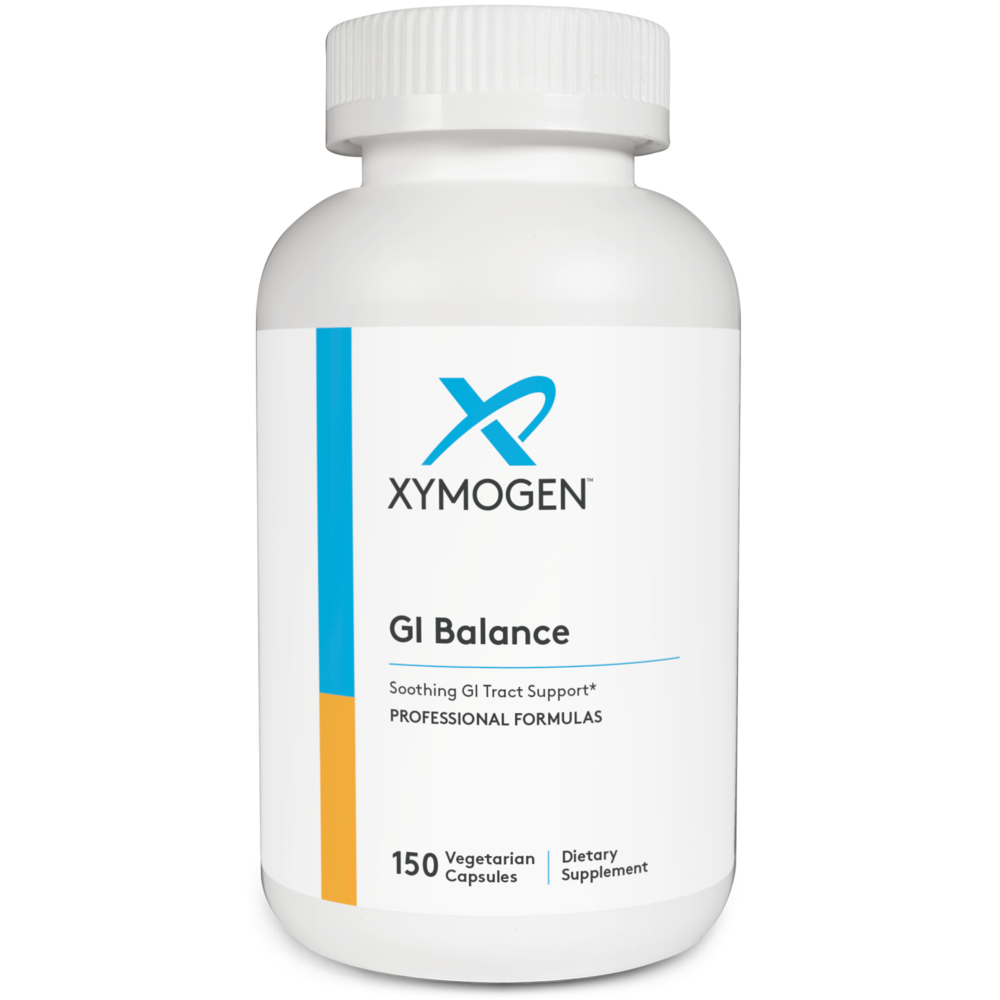
GI Balance
We prefer this brand because...
This unusual variant of the classic herbal Robert’s Formula includes the main original botanicals along with N-acetyl glucosamine, which amplify the actions of the traditional herbs. This addition provide effective extra support for the gut lining to repair, reduce inflammation, and aid in protein digestion. By taking over a little of the work of dismantling and absorbing proteins, this can allow stomach acid levels to decrease, as acid output is less stimulated by the need for protein breakdown. GI Balance‘s mildness makes it safe for long-term use for patients with inflammatory bowel disorders and GERD with heartburn or reflux. Our patients taking GI Balance have experienced excellent results, soothing pain and inflammation, speeding stomach healing, fostering a healthy bacterial microbiome, and reducing blood and mucus that may come with elimination.
About this product
Slippery elm, ulmus rubra, is a tree native to eastern Canada and the Appalachian Mountains in the central and eastern and United States. Its inner bark is the source for a slippery mucilage that has historically been used to soothe mucous membranes for sore throats, cough, heartburn, reflux, and inflammatory bowel disorders. For herbal medicine use, slippery elm extract comes as a mild-flavored powder in teas or capsules which provides sustained release of mucilage complex to mucous membranes. Slippery elm also contains tannins which may add a gentle astringent benefit to reduce excessive mucus in stools; phytosterols including beta-sitosterol; flavonoids; and tiny amounts of salicylic acid which is commonly used for colitis, and which may contribute a subtle anti-inflammatory effect. Slippery elm and its mucilage can encourage formed bowel movements: for diarrhea its bulk-forming properties and tannins help firmer stools; for constipation its mucilage smooths the passage of stools and softens the stool texture. Studies have found that slippery elm bark can improve stool frequency by 20% and reduce abdominal pain and bloating in people with constipation-predominant bowel inflammation. Slippery Elm is also very valuable for the treatment of ulcers; its soothing effect can give significant pain relief while allowing the ulcerated surface to heal under the protective mucilage coating.
Marshmallow root has a long tradition in natural medicine used to soothe, coat, protect and promote repair of mucous membranes of the digestive and respiratory tracts. Marshmallow is a perennial herb native to damp areas of northern Europe and western Asia, now common in the salt marshes along the eastern seaboard of the United States and enjoyed as an ornamental for its velvety leaves and purple flowers.
Homer’s Iliad, written over 2,800 years ago, refers to marshmallow as a healing herb. Its botanical name Althaea comes from the Greek word ‘althe’, meaning ‘to cure’, and it was widely used in ancient Greek medicine. Theophrastus (c.372-286 BC) documented its use for soothing mucous membranes and coughs, and it is mentioned by Plato, Virgil and Pythagoras. Marshmallow’s use spread from Greece to Syria, Arabia, and India where it became a prominent herb in the Ayurvedic and Unani healing traditions. Ancient Romans included it in a healing soup with barley, also a soothing digestive plant reportedly favored by Hippocrates. Recently marshmallow has been approved for medicinal use by the German Commission E to relieve coughs and inflammation of the gastric mucosa, mouth and throat.
Marshmallow root contains high levels of mucilage polysaccharides: up to 11% in the winter and lower at 5-6% in summer. Mucilage forms a protective coating on the mucosal lining of the respiratory tract, shielding it from irritants. Marshmallow has antispasmodic effects to relax the airways and gut. It reduces excessive mucus secretion and slows the speed of cilia, the tiny hair-like cell projections that waft mucus out of airways. It contains quercetin which has potent anti-inflammatory and anti-allergy effects for the respiratory and intestinal systems; tannins which bring astringent benefits for loose stools and improve bowel muscle tone; salicylates; the amino acid asparagine; and antioxidant flavonoids. Marshmallow is rich in pectin, up to 11% in the root, which helps normalize stools though it may lower blood glucose level. A 1966 study found that marshmallow has anti-inflammatory properties that may equal certain steroids, maybe due to its salicylates.
Marshmallow shows mild antimicrobial actions: in research, it stimulated white blood cell phagocytosis and suppressed staph aureus and pseudomonas species. It has been used for interstitial cystitis to soothe bladder inflammation and pain. It can relax the bladder wall muscle and help release bacteria hidden in bladder wall folds thus it has a minor use for urinary infections. Medicinal marshmallow has little in common with the fluffy candy!
N-acetyl d-glucosamine (NAG) is a necessary building block for the gastric and intestinal linings to make mucin, its natural protective glycoprotein secreted by goblet cells. Mucin made from NAG is incorporated into a glycocalyx, a protein-polysaccharide complex that forms a fuzz-like coat surrounding intestinal cells. This coat, 0.3 micrometers thick, also provides extra surface for absorption and it holds enzymes from intestinal cells that are essential for the final steps of protein and carbohydrate absorption. NAG is a variant of glucosamine, which the body naturally makes; for therapeutic use it is derived from shellfish. It appears that in inflammatory bowel disease, N-acetylation of glucosamine is deficient, impeding mucin synthesis. Intestinal cells from patients with ulcerative colitis or Crohn’s disease readily take up NAG. Evidence indicates that NAG taken by mouth can reduce symptoms of Crohn’s disease or ulcerative colitis. It is absorbed from the gut and directly drawn into the mucosal glycoproteins. Unlike glucosamine sulfate, NAG has part of an acetic acid molecule attached rather than sulfur. NAG is irrelevant for arthritis.
There are other natural medicines that are beneficial and worth reading about, but not included in this formula such as geranium maculatum, , echinacea, bromelain, goldenseal, and cabbage.
Geranium maculatum or cranesbill is an astringent and styptic herb that discourages bleeding. Indigenous to the northeastern United States, it has been used for centuries as a natural remedy for heavy menstrual flow, nosebleeds, hemorrhoids, and other bleeding as long as it is from diagnosed benign causes. Geranium root is a rich source of tannins, which act as natural astringents to tighten tissues, to improve blood vessel tone and encourage the tiny muscle fibers in vessel walls to contact and reduce blood seepage, and to calm inflammation.
For inflammatory bowel disorders, geranium and its tannins soothe cramps, can prevent and treat diarrhea, and help to normalize stool consistency. There is some evidence that it also helps gastrointestinal health by inhibiting microbes including Yersinia enterolitica and the fungus Aspergillus. Geranium root is also beneficial for hemorrhoids, in oral formulas or a concentrate in cream, where its astringent action discourages bleeding and may help shrink hemorrhoid veins.
Echinacea can reduce the risk of infection in inflamed intestines due to its antiseptic qualities. The mixture of species E. purpurea and E. angustifolia in ample concentrations brings broader efficacy. These, along with E. Pallida, are the recognized medically effective varieties. Echinacea has been documented in hundreds of studies since 1950 to boost immune function and to attack microbes and viruses directly. Echinacea activates white blood cells and promotes their ability to identify and attack viruses and bacteria. It can raise immune mediators that activate macrophage white cells and boost their numbers. It also encourages phagocytosis, the ability of macrophages to engulf bacteria and increases natural killer cell activity and the number of active T-cells. Echinacea species stimulate immune cytokines, improve T-lymphocyte cell-mediated immunity, and boost gamma globulins that tackle microbes. Studies indicate that echinacea may also directly kill the yeast Candida albicans and bacterium Listeria monocytogenes. In cell culture research, E. purpurea was shown to prevent Campylobacter jejuni, a common bacterial cause of diarrhea, from adhering to the bowel lining.
Goldenseal has astringent benefits to help reduce excessive intestinal mucus, and to heal mucous membranes. As a classic ‘bitter’ herb, it stimulates the natural bile flow and pancreatic enzymes to promote nutrient absorption. In the digestive tract, its active constituent berberine fosters the healthy growth of helpful probiotics, good bacteria, and discourages yeast and noxious microbes. Berberine, the alkaloid in goldenseal, has excellent antiviral and suppresses growth of Gram-positive and Gram-negative bacteria, preventing them from adhering to gut linings and other tissues. It attacks fungal and protozoan pathogens, by inhibiting their RNA functions and protein synthesis. Berberine, with its broad-spectrum antimicrobial action, works in a similar mode of action as drugs including gentamicin used against H. Pylori. Berberine also is an effective remedy for gas, bloating, intestinal cramps and diarrhea.
Bromelain is the name for a group of sulfur-containing proteases, enzymes that break down protein. It is extracted from the stem of the pineapple plant. Taken with meals, bromelain will be used by the body to digest proteins.
Cabbage leaf is an old-time natural remedy that protects the stomach lining, encourages healing of the intestinal mucosal lining, and is anti-inflammatory. It appears to enhance the liver’s ability to conjugate and remove waste, either environmentally or from within the body, and cabbage juice is used as an alterative or blood cleanser. Hundreds of studies have elucidated the anti-inflammatory nutrients including anthocyanins and polyphenols in cabbage.
Cabbage and its juice are also popular classics for GERD and ulcer repair. Cabbage is a rich source of a substance called S-methyl methionine which has been found in research to promote rapid healing of stomach ulcers. Cabbage juice, including sauerkraut, is also an excellent stimulant for balanced acid output, encouraging an adequate amount for protein breakdown and antiseptic actions within the stomach, but not encouraging excessive acid levels. Cabbage contains other beneficial compounds including glucosinolates, anti-inflammatory isothiocyanates, antioxidant polyphenols, and glutamine, all of which may support repair of the stomach and intestinal linings.
Contents
5 capsules provide:
Zinc (as zinc L-carnosine) 16 mg 145%
Slippery Elm (Ulmus fulva) (bark) 500 mg
N-Acetyl-D-Glucosamine 500 mg
Aloe Vera 200:1 Extract (Aloe barbadensis) (leaf gel) 300 mg
Porcine Gastric Mucin 200 mg
Green Kiwifruit (Actindia deliciosa)(fruit) (5,000 AU actinidin) 200 mg
Marshmallow (Althaea officinalis) (root) 200 mg
Licorice Extract (Glycyrrhiza glabra)(root) (3.5% glabridin) 150 mg
Quercetin (as quercetin dihydrate) 100 mg
Prune (Prunus domestica) (fruit) 100 mg
Chamomile Extract (Matricaria recutita) 100 mg (flowering head) (1% apigenin-7-glucoside)
Cat’s Claw (Uncaria tomentosa) (bark) 100 mg
Okra (Hibiscus esculentus) (pod) 100 mg
Other Ingredients: capsule (hypromellose and water), hydroxypropyl cellulose, ascorbyl palmitate, silica
This product does not contain wheat, gluten, yeast, soy, dairy, fish, shellfish, peanuts, tree nuts, soy, GMOs, artificial coloring or sweeteners.
Cautions
Always take natural remedies under the supervision of your health care provider. Do not use GI Balance without the advice of your healthcare professional if you take lithium: marshmallow might decrease the speed of clearing lithium, and your lithium dose might need to be changed.
Marshmallow is rich in pectin which may slightly lower blood glucose levels. Monitor your blood sugar closely if you use medicines including insulin, metformin, glyburide, pioglitazone (Actos) or natural remedies including chromium, gymnema, cinnulin. Do not take GI Balance at the same time as other oral medications, as the mucilage in slippery elm and marshmallow can slow their absorption: take GI Balance at least one hour away from other medicines.
Consult with your physician if you take blood thinners such as warfarin, Plavix or aspirin, or if you take nonsteroidal anti-inflammatory drugs regularly, or natural remedies including fish oil, gingko, vitamin E as NAG or glucosamine may increase clotting times. Avoid NAG if allergic to shellfish, though there is no actual evidence that glucosamine per se triggers shellfish allergy symptoms.
Do not use GI Balance during pregnancy or lactation unless under the guidance of your physician as there is insufficient data about safe use during pregnancy. There is folklore that slippery elm may increase the risk of miscarriage though this is not scientifically substantiated.