For ANXIETY, GABA or gamma-aminobutyric acid, is a neurotransmitter produced by the brain which has natural calming and anti-anxiety effects by decreasing neuronal excitability. GABA slows down specific chemical signals in your brain to help regulate the brain’s stress response. For people who cannot produce enough on their own, taking GABA effectively and gently reduces anxiety, and it also promotes quality sleep, eases depression, and reduces premenstrual symptoms.
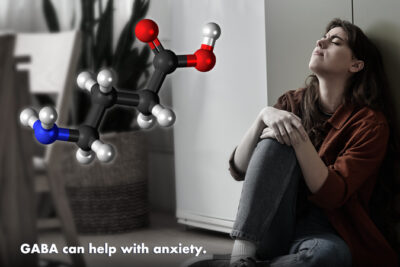 GABA is a non-essential amino acid produced in the brain from glutamate. It is the most common inhibitory, or calming, neurotransmitter in your central nervous system, playing a key role in maintaining the delicate balance of neurotransmission. Neurotransmitters are biochemical messengers that carry messages from one nerve cell in your brain to the next. As an inhibitory neurotransmitter, GABA lessens the ability of a nerve cell to receive, create or send chemical messages to other nerve cells. The brain must have a balance between the inhibitory effects of GABA and the excitatory effects of glutamate to function properly. GABA’s inhibitory effects can help manage stress and promote a sense of calm and well-being. By reducing the activity of neurons that trigger stress responses, GABA can help to reduce anxiety.
In a 2019 study, researchers found that consuming GABA-fortified tea reduced participants’ stress scores. Other research has noted that GABA can act as a natural pain reliever, which further calms anxiety.
GABA can also help anxiety by improving sleep quality and reducing insomnia. A 2008 study found that patients with insomnia had 30 percent lower levels of GABA than those in the control group. This means that insomniac patients have a higher risk of anxiety along with low GABA levels in their brains. When GABA is low, the brain struggles to calm down; the overactive brain signals prevent relaxation and make it difficult to fall asleep. GABA helped participants in a 2015 study fall asleep more quickly, shortening the amount of time it took to fall asleep by an average of five minutes.
Anxiety is one of the most common mood disorders and is often characterized by hyperactivity in certain brain regions, especially the amygdala, which assists in managing emotional responses.¹ GABA counterbalances the effects of excitatory neurotransmitters like glutamate and helps to keep emotional responses in check. When GABA binds to its receptors, it usually leads to an influx of negatively charged ions into the neuron or an efflux of positively charged ions out of the neuron. This makes the neuron’s membrane potential more negative, a process called hyperpolarization, thus decreasing its likelihood of firing an action potential and transmitting a signal. This ‘inhibitory’ action leads to the calming effect. Many common anti-anxiety medications, such as benzodiazepines (e.g., Xanax, Valium), work by enhancing the effects of GABA at its receptors, thereby increasing its inhibitory action, and reducing anxiety.
Research has found that people who experience anxiety disorders often have lower levels of GABA in their brains, and supplementation can make a big difference. Also, other ways to support and encourage GABA levels include limiting chronic stress and avoiding excessive caffeine or alcohol intake as they can deplete GABA levels. Meditation can promote relaxation and contribute to a more balanced neurotransmitter profile. Certain foods such as carrots, root vegetables, and pine nuts may indirectly support GABA production through the gut-brain axis. Regular physical activity has been shown in studies to increase GABA levels. Studies using magnetic resonance spectroscopy have measured acute increases in GABA after a single yoga session and showed that regular practice can lead to sustained elevated levels that correlate with reduced anxiety symptoms. The mechanism is thought to involve increased parasympathetic nervous system (PNS) activity, which stimulates vagal nerve afferents and leads to widespread GABA release.²
The scientific understanding of GABA’s role in anxiety is strong, and research is ongoing to study the effectiveness of oral GABA supplements in directly influencing brain GABA levels to alleviate anxiety. Some studies have looked at how effectively GABA supplements can cross the blood brain barrier, the protective membrane that controls what enters the brain. The extent to which oral GABA intake increases brain GABA concentrations is being evaluated.³ Some research suggests that while direct brain entry may be limited, oral GABA could still exert effects through the gut-brain axis, as the enteric nervous system (in the gut) also contains GABA receptors. There is evidence showing that blood GABA levels can be elevated 30 minutes after oral intake. Several effective anti-anxiety medications work by enhancing existing GABA activity, thus illustrating the critical role of this neurotransmitter.
Many of our patients taking GABA report feeling more relaxed, less stressed, and having fewer and milder anxiety episodes. They are also able to sleep better, which then calms anxiety too. The benefits of GABA tend to build gradually over weeks and months, and patients note significantly greater improvements in anxiety after 3 to 6 months of consistent intake of GABA.
Recommendation: GABA (gamma-aminobutyric acid), 750 to 2,500 mg daily, taken with or between meals, or as recommended by your healthcare provider.
References
- Gottesman, I. I., & Gould, T. D. (2016). The molecular neuroscience of anxiety: A genetic and epigenetic perspective. Dialogues in Clinical Neuroscience, 18(2), 119–128.
- Johnston, G. A. R., & Beart, P. M. (2024). Milestone review: GABA, from chemistry, conformations, ionotropic receptors, modulators, epilepsy, flavonoids, and stress to neuro-nutraceuticals. Journal of Neurochemistry, 168, 1179–1192. https://doi.org/10.1111/jnc.1608
- Hepsomali, P., et al. (2020). Effects of Oral Gamma-Aminobutyric Acid (GABA) Administration on Stress and Sleep in Humans: A Systematic Review. Frontiers in Neuroscience, 14, 923.